
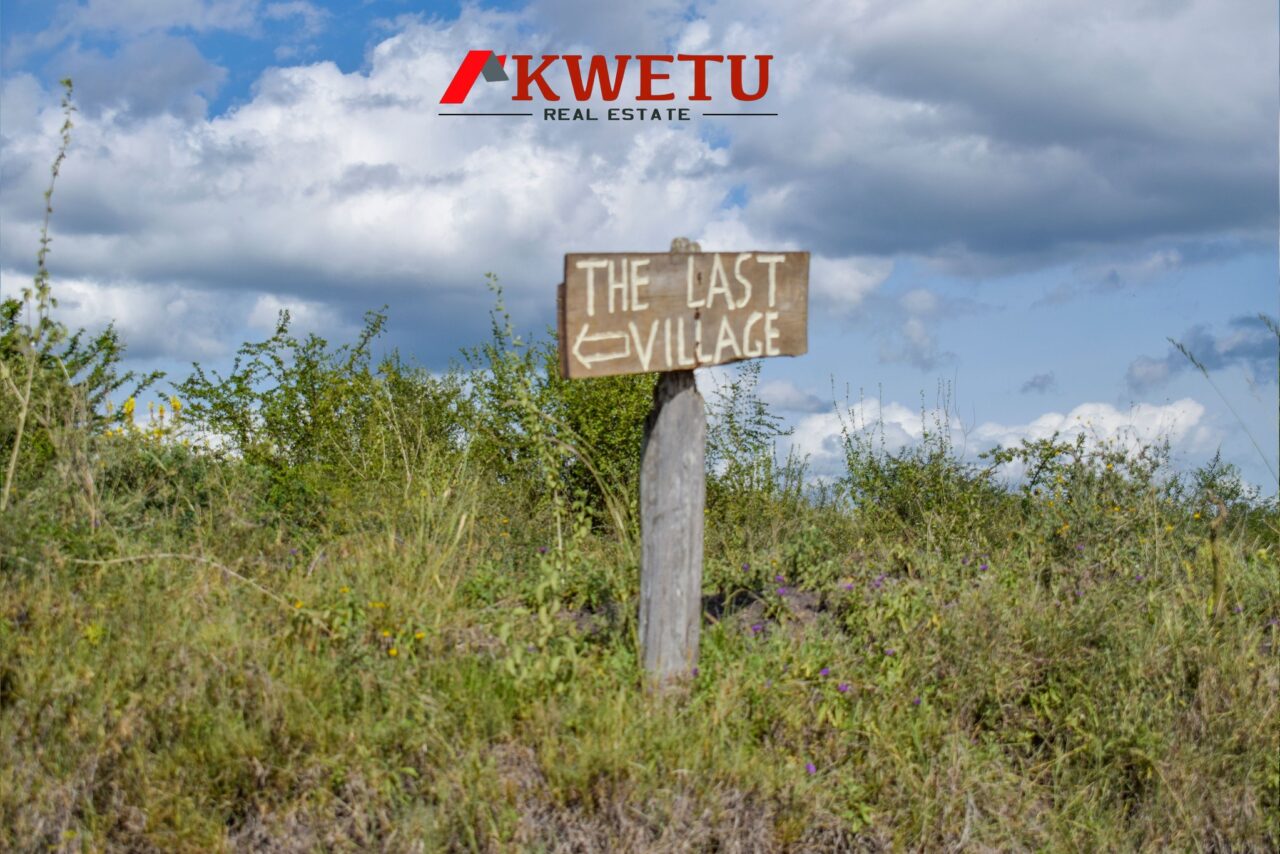

Land subdivision is the process of dividing one parcel of land into two or more smaller parcels.
It is common in Kenya for several reasons.
A landowner may want to sell part of their property, create individual plots for family members, develop a residential estate, prepare land for investment, or make a large parcel more suitable for the market.
For example, someone who owns a large parcel may decide to divide it into smaller plots and sell them individually.
But subdivision isn’t simply a matter of putting up boundary markers and selling portions of land.
There are planning, survey, legal and registration requirements that need to be considered before the resulting parcels can be properly dealt with as separate properties.
So, how does land subdivision work in Kenya?
In simple terms, the process involves determining whether the land can be subdivided, obtaining the necessary approvals, carrying out the required survey work, preparing the relevant plans and documents, and registering the resulting parcels.
The exact requirements can vary depending on the location, size, tenure and use of the property.
Why Do People Subdivide Land?
Landowners subdivide property for different reasons.
1. To Sell Smaller Plots
Large parcels can sometimes be difficult to sell as a single property.
Subdivision allows an owner to create smaller plots that may be more accessible to individual buyers.
2. To Develop Residential Property
A developer may subdivide land to create:
- Residential plots
- Gated communities
- Housing developments
- Apartment development sites
- Mixed-use projects
3. Family Land Distribution
Land may be subdivided to allocate portions to different family members.
However, family arrangements should still be properly documented and handled through the appropriate legal processes.
4. Agricultural Planning
Large agricultural holdings may sometimes be divided for different ownership or farming purposes, subject to applicable laws and requirements.
5. Investment
An investor may acquire a larger parcel, obtain the appropriate approvals, subdivide it and sell the resulting plots.
This can create opportunities, but it also involves costs, planning considerations and regulatory requirements.
Is Subdivision the Same as Selling Land?
No.
This distinction is important.
Selling land
A landowner transfers ownership of an existing parcel to another person.
Subdivision
A landowner changes one parcel into multiple parcels.
After subdivision, the resulting parcels can potentially be dealt with individually, subject to the applicable registration and legal requirements.
For example:
Before subdivision:
Parcel A
After subdivision:
Parcel A1
Parcel A2
Parcel A3
Parcel A4
The original parcel details may change as the new parcels are created and registered.
How Does Land Subdivision Work in Kenya?
While the exact procedure can differ depending on the property and location, a typical subdivision process involves several stages.
Step 1: Determine Whether Subdivision Is Suitable
Before starting the process, establish whether the land can realistically be subdivided.
Consider:
- Land size
- Location
- Existing use
- Planning requirements
- Minimum plot sizes
- Road access
- Existing developments
- Physical characteristics
- Applicable restrictions
This is where professional advice can save you time and money.
A proposed subdivision may look attractive on paper but become impractical once access roads, planning requirements and other factors are considered.
Step 2: Review the Land Ownership Documents
Before subdivision, confirm that the ownership information is in order.
This can involve reviewing:
- Title documentation
- Official search
- Survey records
- Existing plans
- Ownership details
- Registered encumbrances
The State Department for Lands provides official search services that help verify ownership and identify registered interests such as charges, cautions and restrictions. citeturn1search0
If there is a problem with the ownership records, it should be addressed before proceeding.
Step 3: Engage a Qualified Surveyor
A surveyor plays an important role in the subdivision process.
They can assess the existing parcel and prepare the necessary survey information and proposed subdivision plan.
The surveyor may consider:
- Existing boundaries
- Beacons
- Dimensions
- Access roads
- Proposed new boundaries
- Existing developments
- Survey requirements
The State Department for Lands provides survey-related services covering matters such as boundaries, beacons and survey plans. citeturn1search1
Step 4: Prepare a Subdivision Scheme
The proposed subdivision needs to show how the original parcel will be divided.
For example:
Existing parcel
↓
Proposed subdivision
↓
Plot 1 | Plot 2 | Plot 3 | Plot 4
The plan should take practical considerations into account.
These can include:
- Access
- Roads
- Drainage
- Plot sizes
- Existing structures
- Utility corridors
- Public access requirements
- Planning considerations
A good subdivision plan isn’t simply about creating as many plots as possible.
It is about creating plots that are usable, accessible and compliant with applicable requirements.
Step 5: Obtain the Required Approvals
Depending on the property and location, the subdivision may require planning and other approvals before it can proceed.
This is an important stage because planning requirements can vary from one location to another.
Relevant authorities may consider matters such as:
- Minimum plot sizes
- Road reserves
- Access
- Land use
- Density
- Planning standards
- Environmental considerations
Do not assume that because a property is privately owned, it can automatically be divided however the owner wants.
Step 6: Consider Land Control Board Consent Where Applicable
Some transactions involving agricultural land are subject to Land Control Board requirements.
The State Department for Lands identifies certain transactions involving agricultural land—including specified sales, leases, transfers and subdivisions—as requiring Land Control Board consent. citeturn1search2
Whether consent is required depends on the nature of the land and proposed transaction.
This is why landowners should establish the applicable requirements for their specific property rather than relying on assumptions.
Step 7: Survey the New Parcels
Once the subdivision has received the relevant approvals, the surveyor can proceed with the appropriate survey work.
This may involve establishing:
- New boundaries
- New parcel dimensions
- Beacons
- Access arrangements
- Survey plans
The objective is to accurately define the new parcels.
Step 8: Mutation and Registration
The subdivision process eventually requires the relevant survey and registration documentation to be processed so that the resulting parcels can be formally recognised in the land records.
The exact documentation and procedure depend on the property and applicable land-registration requirements.
This is one reason why subdivision should be handled by qualified professionals rather than treated as a purely physical exercise.
Step 9: Obtain the Resulting Ownership Documents
Once the subdivision and registration process has been completed, the resulting parcels can have their own registered property information, subject to the applicable tenure and registration process.
At this point, the landowner can deal with the resulting parcels according to the law.
For example, they may:
- Sell individual plots
- Transfer them
- Develop them
- Retain some and sell others
- Allocate them according to a legitimate family arrangement
What Should You Consider Before Subdividing Land?
Subdivision can create opportunities, but it also introduces important considerations.
1. Access
Every resulting parcel needs appropriate access.
Creating many plots without properly considering roads and access can make the resulting properties difficult to use or sell.
2. Plot Size
The smaller the resulting plots become, the more important planning requirements become.
Don’t assume that a large parcel can be divided into an unlimited number of tiny plots.
Applicable planning standards may impose minimum sizes depending on the location and intended use.
3. Infrastructure
Consider whether the resulting plots can realistically access:
- Roads
- Electricity
- Water
- Drainage
- Telecommunications
- Other services
Infrastructure can significantly influence the attractiveness and value of the resulting properties.
4. Land Use
Ask whether the proposed subdivision fits the existing and intended land use.
For example, the requirements for subdividing agricultural land may differ from those affecting land in an urban or residential area.
5. Existing Structures
If there are houses, commercial buildings or other structures on the original parcel, consider how the subdivision will affect them.
A poorly planned boundary could:
- Cut off access
- Create unusable spaces
- Affect utilities
- Reduce functionality
- Create disputes between owners
How Many Plots Can You Create From One Parcel?
There is no universal answer.
It depends on factors such as:
- Original land size
- Location
- Planning regulations
- Minimum plot sizes
- Road requirements
- Land use
- Physical characteristics
- Existing infrastructure
- Applicable approvals
For example, a 10-acre parcel in one location may support a very different subdivision pattern from a 10-acre parcel somewhere else.
Bigger isn’t automatically better.
The goal should be to create viable parcels that comply with applicable requirements and have practical value.
Does Subdivision Increase Land Value?
It can, but it isn’t guaranteed.
Subdivision may make a large parcel more accessible to buyers by creating smaller plots.
For example, there may be more potential buyers for:
20 plots × manageable individual prices
than for:
1 large parcel × high total price
However, subdivision also introduces costs.
These may include:
- Professional fees
- Survey costs
- Approval costs
- Infrastructure costs
- Registration-related costs
- Marketing expenses
- Other transaction expenses
Therefore, landowners should calculate the potential return before subdividing.
Land Subdivision for Investment
Subdivision can form part of a property investment strategy.
An investor may purchase a large parcel, improve access and services, obtain the necessary approvals and eventually sell individual plots.
But successful subdivision requires more than simply buying land and dividing it.
A good investment plan should consider:
Acquisition cost
How much did you pay for the original parcel?
Subdivision costs
What will professional and approval costs be?
Infrastructure
Will roads, drainage, electricity or water need to be provided?
Marketing
How much will it cost to sell the resulting plots?
Market demand
Are buyers actually looking for plots in this location?
Expected selling price
What can comparable plots realistically sell for?
Holding period
How long might it take to sell all the plots?
This is where proper property research becomes particularly important.
Common Land Subdivision Mistakes
1. Subdividing Without Checking Planning Requirements
Don’t design the subdivision first and ask about approvals later.
Understand the applicable requirements before committing resources.
2. Creating Plots Without Adequate Access
A plot without practical access can become difficult to use or sell.
3. Ignoring Survey Records
Existing survey information should be properly reviewed.
4. Creating Plots That Are Too Small
More plots don’t automatically mean more profit.
If the resulting plots don’t meet applicable requirements or market expectations, the strategy can backfire.
5. Forgetting Infrastructure Costs
Roads, drainage, electricity and water can significantly affect the overall economics of a subdivision project.
6. Relying on Informal Agreements
If multiple people have interests in the property, informal family or verbal arrangements can create problems later.
Use proper legal documentation.
7. Selling “Plots” Before Proper Subdivision
This is an area where buyers should exercise particular caution.
If someone is marketing individual plots from a larger parcel, ask:
Has the subdivision actually been approved and registered?
Don’t assume that a marked-out portion of land is already a legally independent parcel.
How Buyers Can Check a Subdivided Property
If you’re considering buying a plot from a subdivision project, conduct your own due diligence.
Check:
1. The parent parcel
Understand where the subdivision originated.
2. Approval status
Ask for evidence of the relevant approvals.
3. Survey information
Confirm the plot boundaries and dimensions.
4. Ownership
Verify who owns the resulting parcel.
5. Official search
Conduct the appropriate search.
6. Physical location
Visit the actual property.
7. Access
Confirm that the plot has practical legal access.
8. Land use
Confirm that the intended use is appropriate.
This connects directly with our earlier article:
Land Due Diligence in Kenya: What Every Buyer Should Check.
Land Subdivision vs Land Partition
These terms are sometimes used interchangeably, but they can describe different situations.
Subdivision
Generally refers to dividing a parcel into multiple parcels.
Partition
Can refer to dividing jointly owned land among co-owners according to their respective interests.
The exact legal meaning and process can depend on the circumstances.
If you’re dealing with jointly owned or family property, obtain professional advice before deciding which process applies.


Leave a Reply